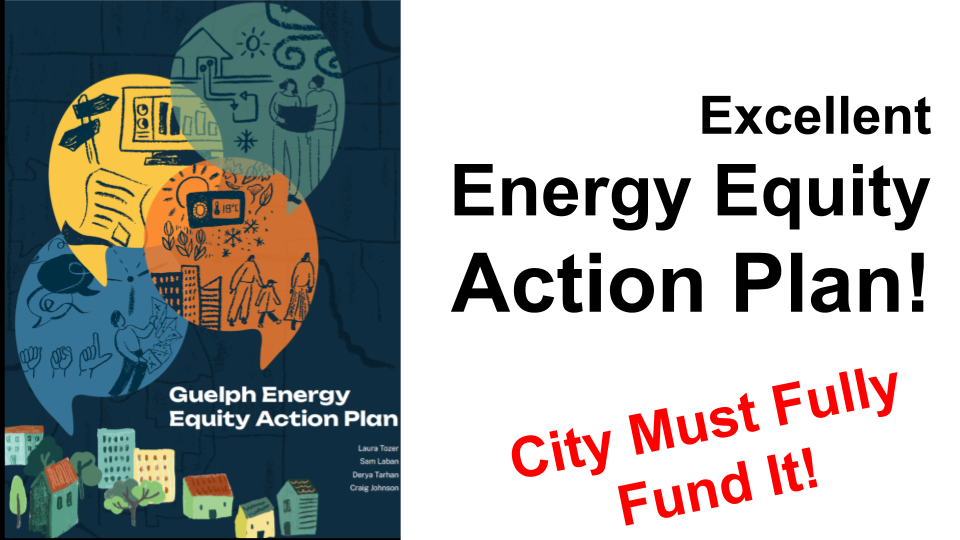
eMERGE is in strong support of the Guelph Energy Equity Action Plan.
What makes this report especially valuable is the process through which it was developed. The authors – Laura Tozer, Sam Laban, Derya Tarhan, and Craig Johnson – brought together the Guelph Energy Equity Community Working Group (individuals with lived experience of energy inequity) the Project Team, and the Guelph Energy Equity Coalition of frontline organizations, of which eMERGE was proud to be a member.
Too often, policies are developed about people rather than with people. This project took a different approach. Residents facing high energy costs, housing challenges, disability, poverty, and other barriers helped shape the solutions.
The report reminds us that energy inequity is not an abstract concept.
- It is the senior deciding whether they can afford to heat their home.
- It is the person with a disability who depends on electricity to power essential medical equipment.
- It is the newcomer family struggling to balance housing costs, employment challenges, and energy bills.
- It is the single parent trying to keep their children safe and comfortable in a poorly insulated apartment.
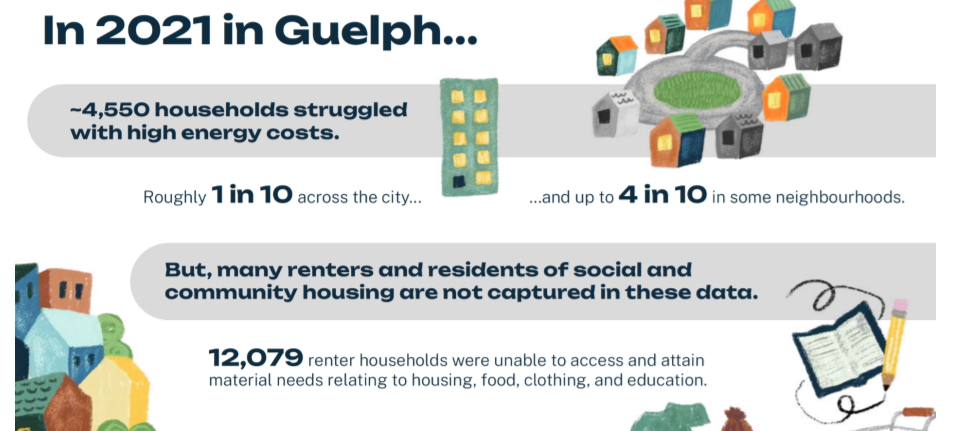
Approximately 4,550 households in Guelph experience a high energy burden. In some neighbourhoods, nearly 40 percent of households are affected. Thousands more renters and residents of social and community housing likely face similar challenges.
Climate change is making these challenges worse. More frequent heat waves, extreme weather, and rising energy costs will place additional pressure on households that are already struggling. Those least responsible for climate change are often the most vulnerable to its impacts.
That’s why this action plan matters.
Its recommendations are practical and achievable. The proposed Energy Coaching Program would help residents navigate existing programs and supports. Improved outreach would ensure information reaches people through trusted community organizations and in languages they understand. Expanded retrofit programs would improve the comfort, efficiency, and affordability of homes. Measures to protect renters would help ensure vulnerable residents are not left behind during the energy transition.
However, a plan alone will not reduce energy inequity.
A report sitting on a shelf:
– will not lower utility bills.
– will not protect a senior during a heat wave.
– will not help a family living in an inefficient home.
Implementation requires commitment, resources, and funding.
Council has an opportunity to create a sustainable long-term funding source. When we’re successful in charging Enbridge for the use of publicly owned rights-of-way, Guelph could receive an estimated $4 million to $8 million annually.
Those revenues could help energy-insecure households afford their utility bills while also expanding grants and financing programs that reduce energy costs through energy efficiency, electrification, renewable energy, and energy storage improvements.
But we can’t wait for that funding – it must begin now.
We urge Council to fully fund its implementation and begin identifying long-term revenue sources that can sustain this work.
Investing in energy equity is an investment in public health, climate resilience, housing stability, affordability, and dignity.
Residents with lived experience with energy inequity have told us what they need.
Frontline organizations – including eMERGE – have identified the barriers.
Researchers have provided the evidence.
The question before Council is no longer whether energy inequity exists or whether action is needed.
The question is whether they are prepared to act on what we now know.
Guelph has an opportunity to become a leader in energy equity and climate justice. This plan provides a clear roadmap. Now we must provide the resources to implement it.