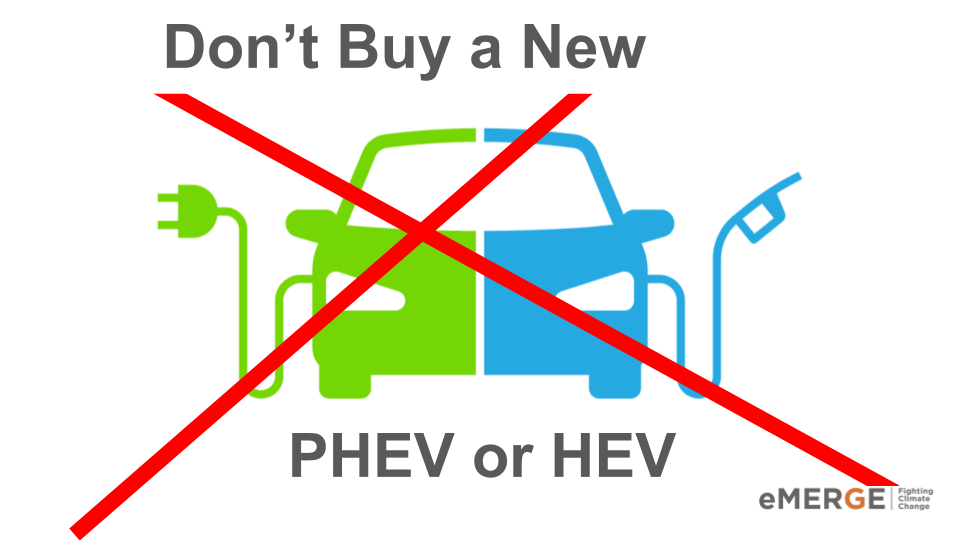
For more than 25 years, hybrid vehicles have played an important transitional role in reducing fuel consumption compared to conventional gasoline cars. Since 2014, eMERGE Guelph Sustainability has promoted electric vehicles — including plug-in hybrids — as part of the shift toward cleaner transportation.
We’re no longer in this transition stage.
The case in 2026 for buying a new hybrid vehicle is increasingly weak — both economically and environmentally. If you’re in the market for a vehicle and aren’t ready to go fully electric, we encourage you to choose a used hybrid rather than a new one. Better yet, consider a used or new fully electric vehicle (EV) that meets your needs.
EVs Now Make Financial Sense
A growing body of Canadian data shows that EVs typically cost less to own over time than comparable gasoline vehicles.
While upfront prices can vary, operating costs tell the real story. Charging an EV in Canada can cost five to ten times less per kilometre than fueling a gasoline vehicle. EVs also have far fewer moving parts — no oil changes, spark plugs, exhaust systems, or complex transmissions — resulting in significantly lower maintenance costs, often estimated at 40–50% less than internal combustion vehicles.
Many analyses show drivers can reach cost parity within three to five years, depending on driving habits and vehicle choice. Meanwhile, the used EV market is maturing, with falling prices making electric vehicles increasingly competitive with used hybrids.
When fuel and maintenance savings are considered, the total cost of EV ownership far outweighs burning fossil fuel in your car.
Climate Impact: Hybrids Still Burn Gas
Hybrid vehicles reduce fuel use, but they do not eliminate it. Fully electric vehicles produce zero tailpipe emissions.
Even when accounting for battery manufacturing and electricity generation, lifecycle studies consistently show that EVs in Canada produce substantially fewer greenhouse gas emissions than hybrids or conventional gasoline vehicles. Ontario’s electricity grid — powered largely by low carbon sources — makes EVs particularly climate-advantageous.
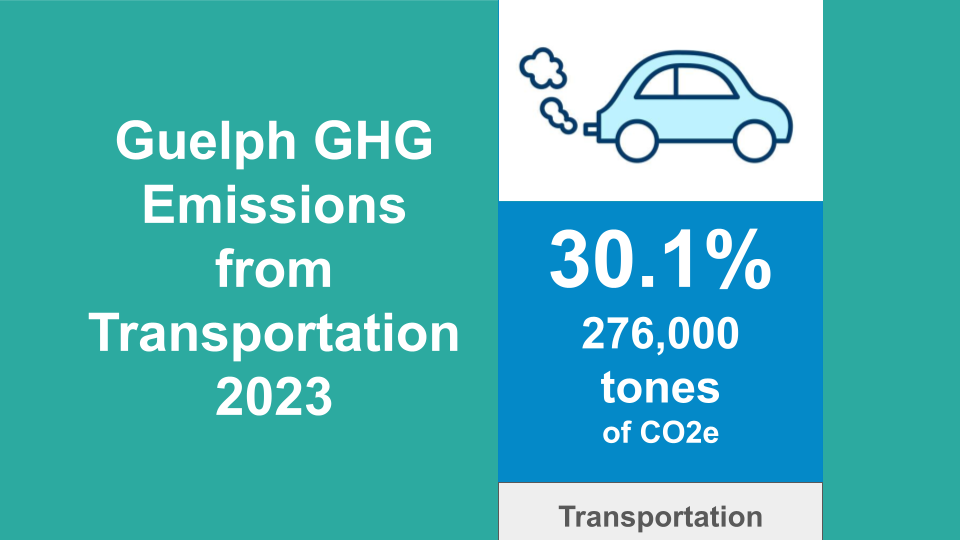
Locally, transportation fuels account for approximately 30% of Guelph’s total community greenhouse gas emissions. Accelerating the shift to fully electric vehicles is one of the most direct ways to reduce this share.
Buying a new hybrid today locks in gasoline use for another decade or more. Buying an EV immediately reduces tailpipe emissions to zero.
A Better Bridge: Used, Not New
We recognize that a fully electric vehicle may not yet work for every household. Budget, charging access, or driving needs can be real considerations.
Choosing a used hybrid is a more environmentally responsible interim option than buying a new one. Purchasing used avoids adding another new fossil-fuel-dependent vehicle to the road, reduces emissions associated with manufacturing, and often makes better financial sense.
Hybrids reduce fuel use, but they don’t eliminate fossil fuel dependence.
The Bottom Line
Incremental improvements are no longer enough. With expanding EV choices, improving charging infrastructure, and strong long-term cost advantages, fully electric vehicles represent the most responsible choice for those who want their transportation decisions to align with climate action.
Don’t buy a new hybrid.
Choose used — or better yet, go fully electric.